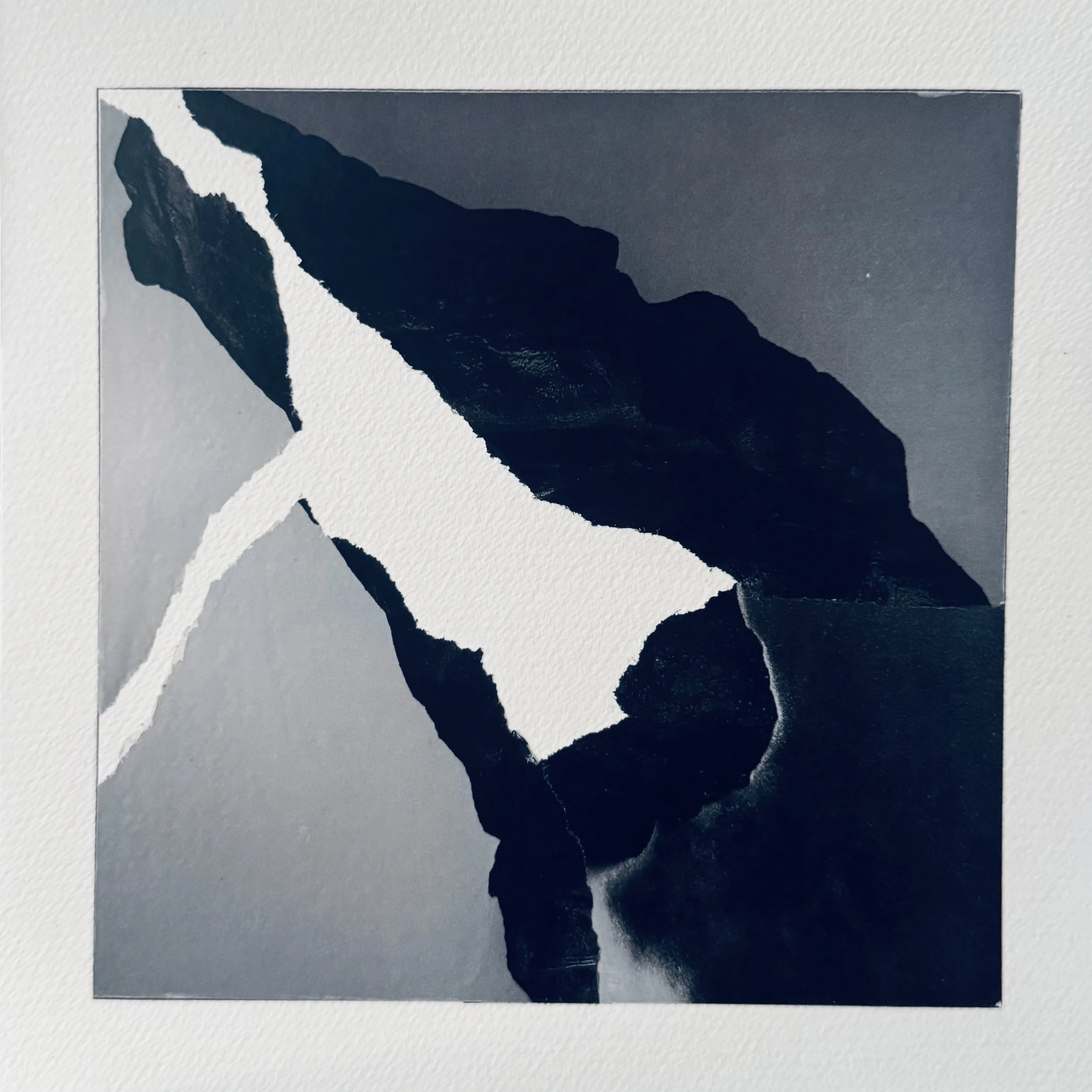
Pardon me, but we are continuing with yesterday’s taboo: abstract art.
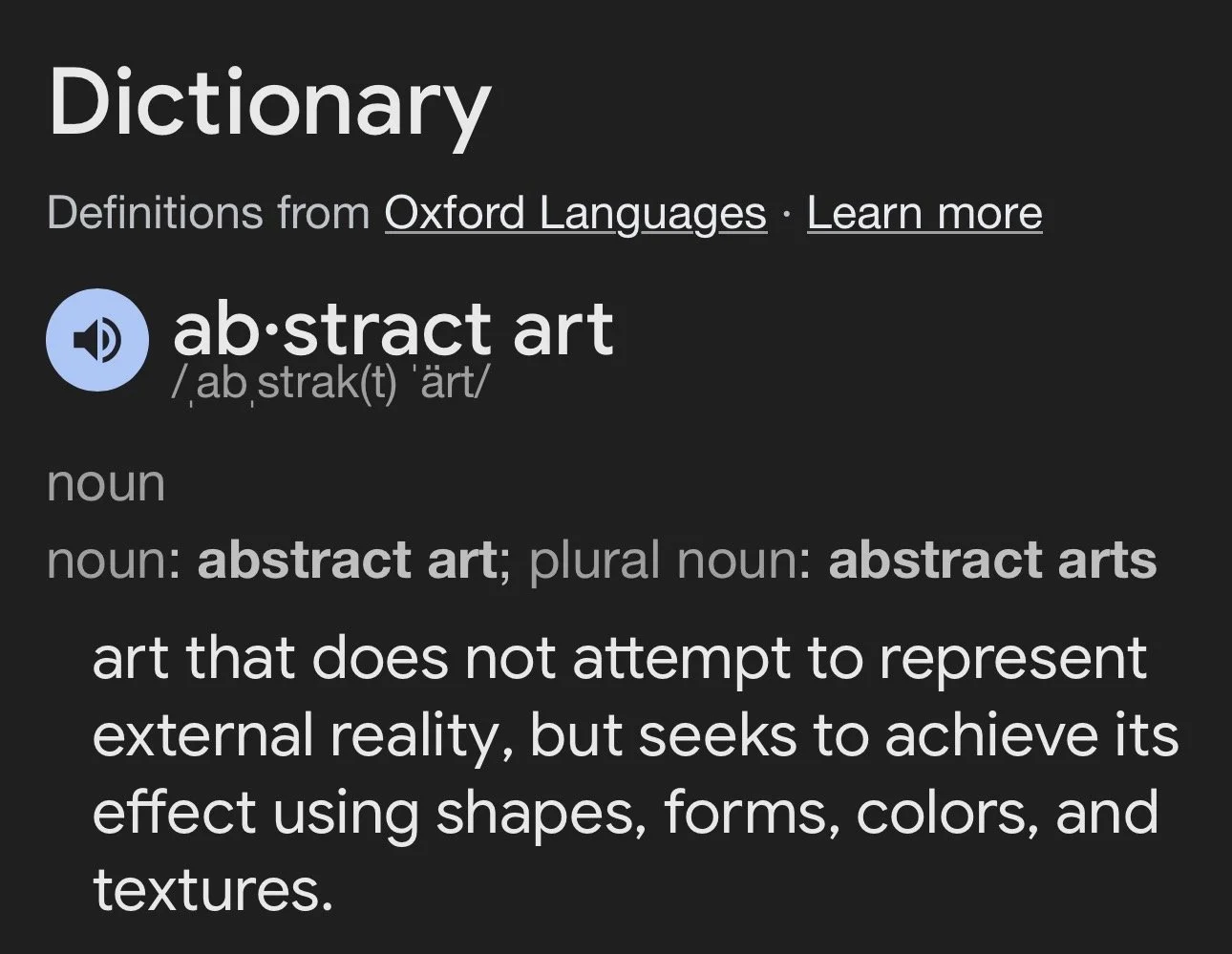
In the definition above, the part that really stands out to me is “art that does not attempt to represent external reality.” That idea hits home—abstraction lives somewhere between imagination and the distortion of something real, whether it’s an object or a person.
I also found some public discourse on abstract art. (Does a Reddit post count as public discourse? 😂)
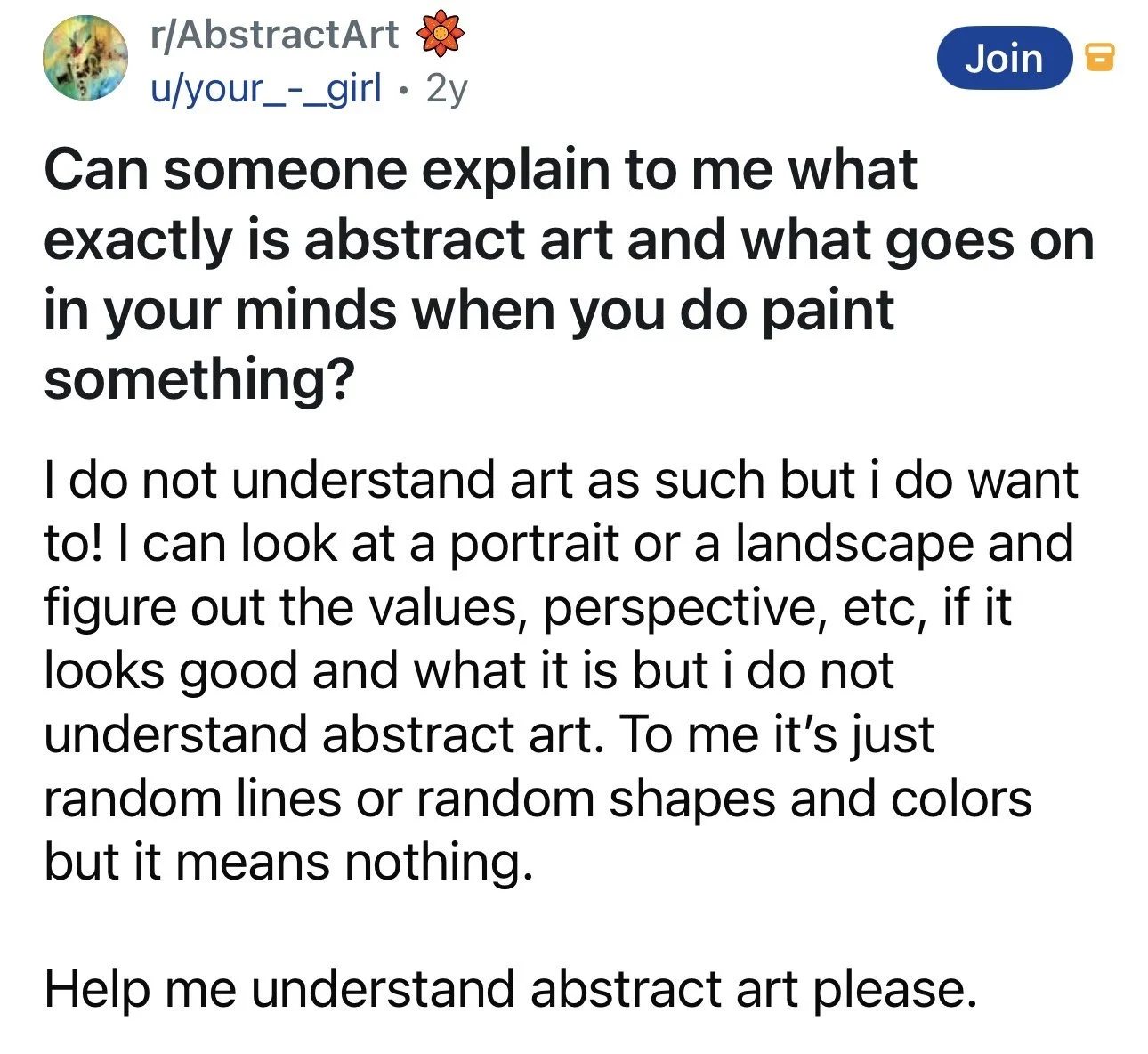
Follow this link to read the Reddit post:
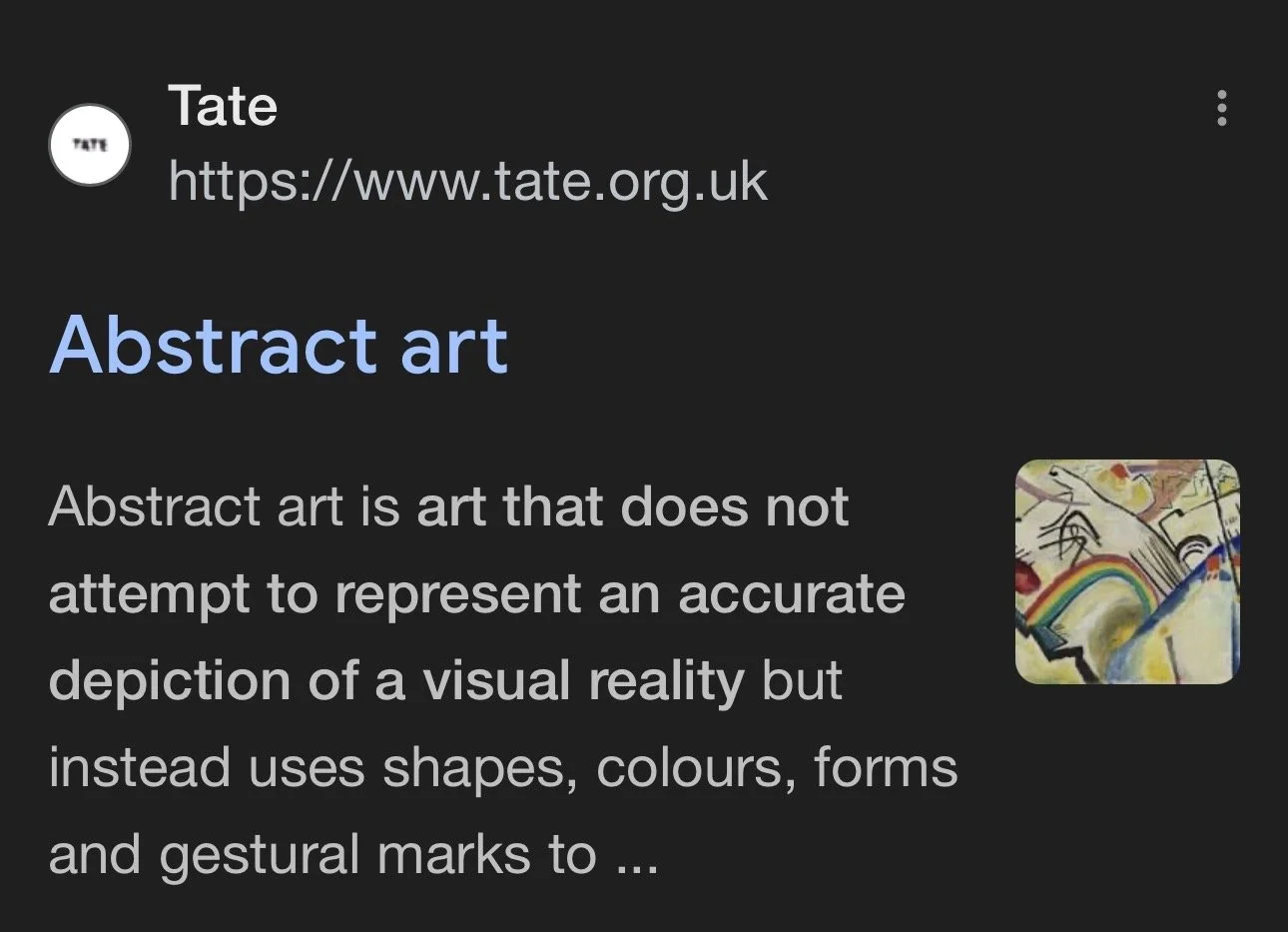
How do museums define abstract art? Here’s an excerpt from the Tate Museum about abstract art:
“Strictly speaking, the word abstract means to separate or withdraw something from something else.
The term can be applied to art that is based on an object, figure or landscape, where forms have been simplified or schematised.
It is also applied to art that uses forms, such as geometric shapes or gestural marks, which have no source at all in an external visual reality. Some artists of this ‘pure’ abstraction have preferred terms such as concrete art or non-objective art, but in practice the word abstract is used across the board and the distinction between the two is not always obvious.
Abstract art is often seen as carrying a moral dimension, in that it can be seen to stand for virtues such as order, purity, simplicity and spirituality.
Since the early 1900s, abstract art has formed a central stream of modern art.”
Read the entire page here: https://www.tate.org.uk/art/art-terms/a/abstract-art
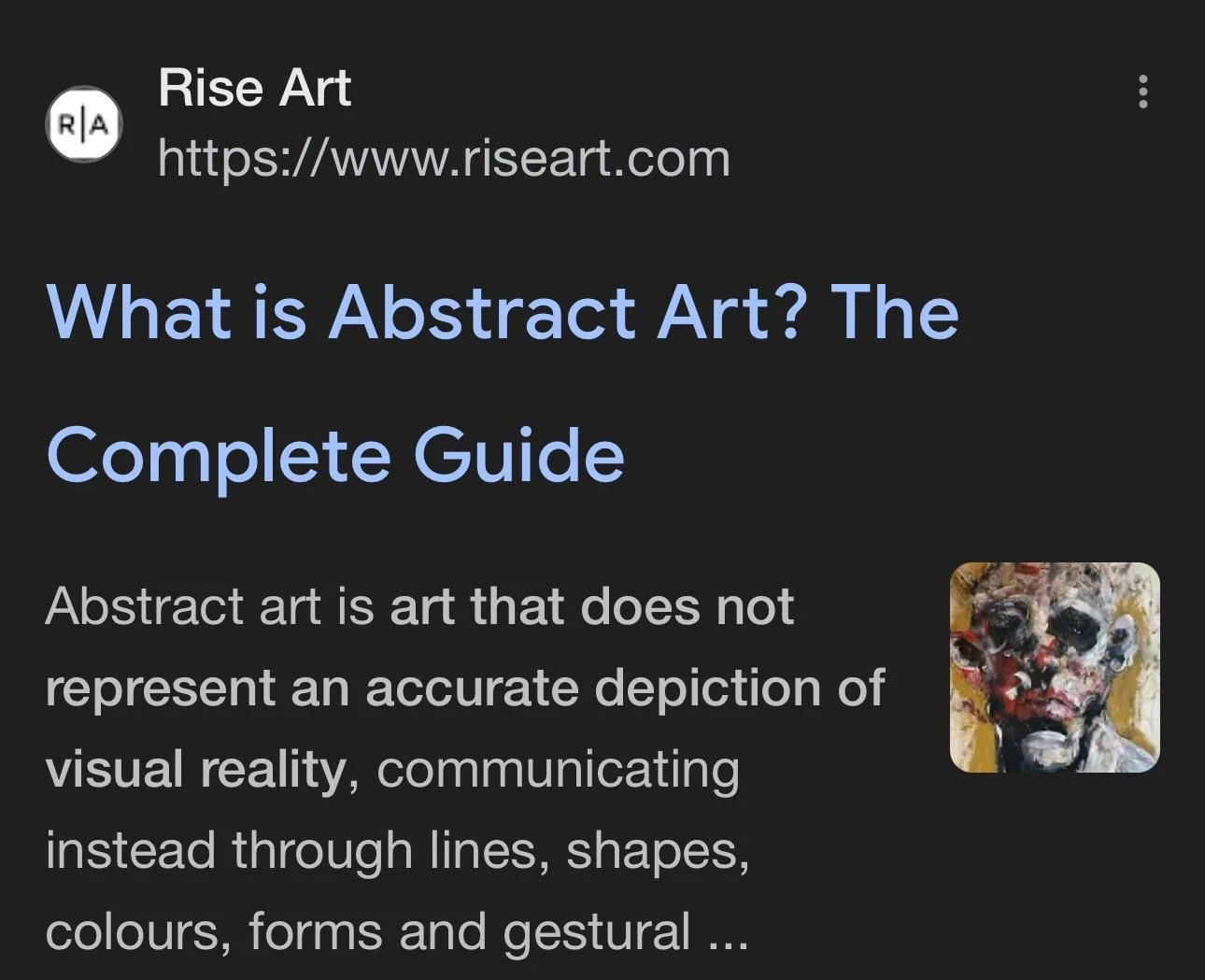
There’s no shortage of takes on what abstract art really means. Rise Art even has a “complete guide,” though honestly, it reads more like a quick summary than anything comprehensive.
Personally, I’m much more interested in what drives each artist—their inspiration, their process, the spark behind their work—than in broad “expert” definitions of abstraction. I love monograph books that include interviews and dig into a specific period of an artist’s life. They give a richer sense of how someone’s style and ideas evolved over time.
So why do people find abstract art controversial or even meaningless? I think it’s because its openness makes people uneasy. With figurative art, we usually know what we’re looking at. But with abstraction, the meaning isn’t spelled out—it pushes us to feel and interpret, and that kind of ambiguity can be challenging.
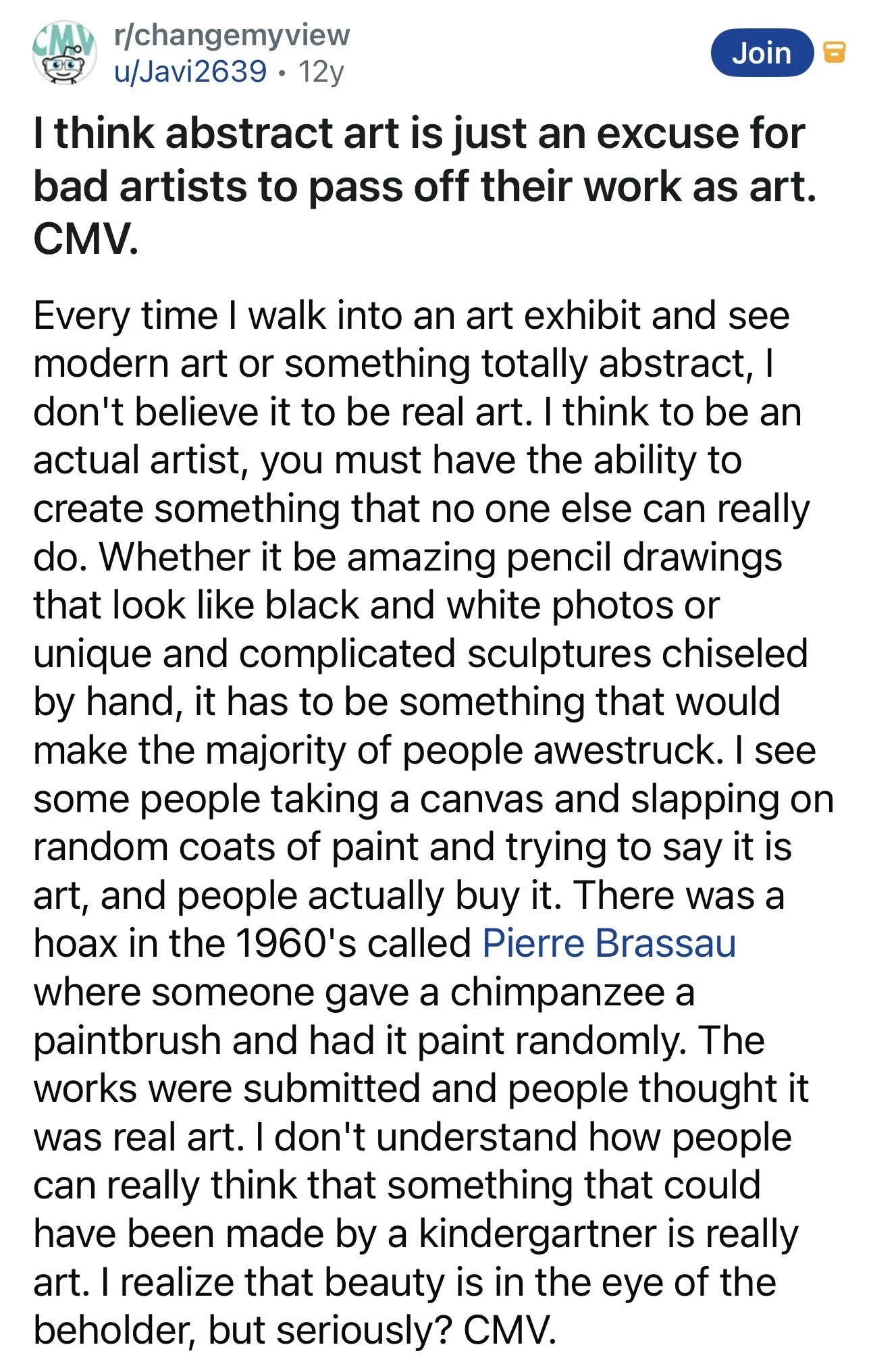
This Reddit post summarizes what I believe most people are uncomfortable with about abstraction - they just think it’s bad art.
Link: https://www.reddit.com/r/changemyview/s/9ZZw8W3q8M
Not being into a certain genre doesn’t make the work “bad”—it just means it’s not your thing. Abstract art is like that: a preference, maybe an acquired taste, or even a bit of an addiction to boundless freedom. It’s where curiosity, color, mark-making, and imagination all collide. A space for artists to push boundaries, to explore what could be, and to interpret what might exist.
To my fellow abstract artists and abstract enthusiasts - let’s keep pushing the limits of our creative minds and senses. Enjoy the journey!
Collage by Heather Polk, “What is Taboo? 2.10.2026”, 2026, torn magazine pages on watercolor paper, 8 in x 8 in